

When Grief Has Many Colors: Supporting Adults with Intellectual Disabilities
Featuring Creative Grief Studio alumna Marla Zapach, a trauma-informed Creative Grief Practitioner working exclusively with the ID community

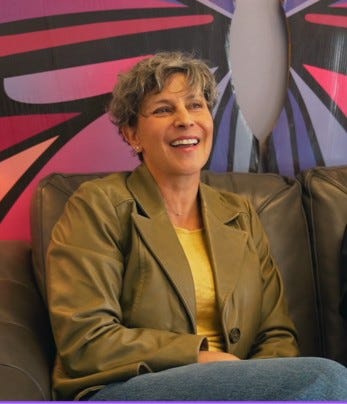
People with intellectual disabilities are often overlooked when it comes to grief support, particularly in rural communities where resources are limited or nonexistent. Traditional grief services are rarely designed with this population in mind, and even when support is offered, it often fails to account for the layered realities of trauma, communication differences, and ongoing losses that many individuals with intellectual disabilities experience.
Studies show that people with intellectual disabilities experience significant health disparities and a high risk of exposure to traumatic events. This exposure can lead to stress-related cognitive, physiological, or behavioral disorders. Access to effective treatments for stress-related disorders is limited for people with intellectual disabilities due to a lack of appropriate assessments and common communication differences.
Through both personal and professional experience, and in response to these gaps, Marla Zapach came to recognize a significant gap. The grief experienced within the intellectually disabled community is rarely tied to a single loss. Instead, it is often cumulative, shaped by repeated disruptions, transitions, and losses that compound over time.
As Marla explains,
“The grief that the intellectually disabled community feels is really more of a compound grief. We know there is loss of parents and friends, but there’s also loss of jobs, loss of autonomy, and loss of independence when clients go into a care system. These compounded losses add up, and they become more and more difficult to deal with and more difficult to resolve.”
In the short video below from the Alberta Hospice Palliative Care Association, Marla Zapach shares her work alongside her client Josh, offering a grounded look at how creative, trauma-informed grief support can foster agency, emotional expression, and resilience for adults with intellectual disabilities.
Who is the program for?
Marla’s work is designed for adults with intellectual disabilities who are navigating multiple, layered losses. These may include the death of a parent, sibling, or caregiver, as well as losses that are less often named as grief, such as the loss of employment, independence, routine, identity, or personal agency.
What makes grief particularly complex for this community is the ongoing loss of agency and autonomy that often accompanies disability, transitions in care, or systemic decision-making done on someone’s behalf. These losses can add layers to grief, making it more difficult to recognize, understand, and navigate.
When grief is combined with unrecognized or unresolved trauma, individuals may struggle to make sense of their experiences or express what they are feeling. This can show up as anxiety, withdrawal, or changes in behavior that are frequently misunderstood or misattributed, rather than recognized as responses to loss.
Many individuals in this community are expected to adapt quickly to change or loss without adequate space to process what they have experienced. This work offers an alternative: time, consistency, and approaches that meet people where they are.
How the work happens…
Rather than relying on a single intervention or short-term support, Marla’s approach unfolds over multiple sessions across a longer period of time. This pacing allows trust to develop and creates space to gently unpack losses as they surface, rather than forcing grief into a narrow timeframe.
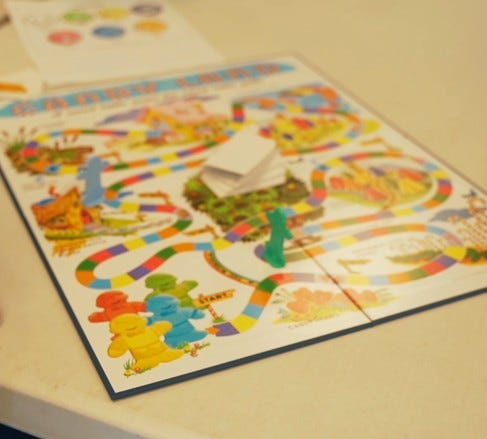
Creative approaches are central to the work. Art, painting, games, and letter writing provide accessible ways to explore emotions that may be difficult to express verbally. These methods support emotion identification and expression through concrete, familiar tools.
Throughout the process, the focus remains on agency, resilience, and skill-building. The goal is not to fix grief or make it disappear, but to support individuals in recognizing their strengths, developing coping strategies, and building confidence in navigating emotions as they arise.
What makes it different…
What distinguishes this work is its commitment to addressing all forms of loss, not just death. Grief is understood as cumulative, shaped by experiences that may still be unfolding. Sessions allow space to explore each loss at its own pace, acknowledging how these experiences interact and intensify one another.
Equally important is Marla’s emphasis on agency. Participants are supported in naming emotions and choosing coping strategies that work for them, reinforcing a sense of autonomy that is often diminished in other systems of care.
Reflecting on her own professional path, Marla credits the Creative Grief Studio with shaping both her confidence and her approach to this work:
“None of this would have been possible if I hadn’t taken the Creative Grief Practitioner course. I wouldn’t have had the confidence, the insight, or the ability to make paths where few have gone before. Thank you for your support and thank you for this course. I can honestly say it has changed not only my life, but others’ lives too.”
Marla’s work reflects the heart of what we aim to cultivate through the Creative Grief Support Certification: confidence, creativity, and the ability to meet grief where it lives, especially in communities that are often overlooked or underserved. We’re grateful to see our alumni building thoughtful, trauma-informed approaches that honor agency, complexity, and lived experience, and we’re honored to have been part of Marla’s journey.
Marla's compound grief insight for the ID community fills such a vital gap. Creative tools meeting folks where they are build agency beautifully. Agency amid layered losses transforms support.