

When the World Ices Over: Collective Grief in a Time of State Violence
By Tamara Beachum, CGS Teaching Team Member


I am struggling. I don’t know what to say about the escalation of state violence that has overtaken the United States. And let’s not get it twisted: this is not new. Black and brown people have been bearing the brunt of this type of violence over the entire history of the United States. Recent murders of protesters by Immigration and Customs Enforcement (ICE) are just that, the most recent murders. Over the last several weeks, many of us have been carrying a kind of grief that does not belong to one moment or one person. The layers accumulate. It settles like the heavy weight of ice on power lines.
Simultaneously, a large part of the country has been gripped by snow and ice storms. Trees topple. Power is lost. Movement is halted. Life narrows to what is immediately necessary. It has been impossible for me not to feel the connection between the weather outside and the emotional climate many of us are moving through.
Winter does not ask our permission.
Collective grief often arrives this way. Not as a single shock, but as a slow accumulation. A recognition that something essential is being harmed again and again, while we are told that this is justified. We are told not to believe our lying eyes, but instead the talking heads of the state, whose stories do not line up with what we see and hear. “I’m not mad at you, bro,” were the last words of Renee Good. “Are you okay,” from Alex Pretti who was putting his body between ICE and two women who had been violently shoved to the ground and pepper sprayed directly in the face. Yes, it accumulates.
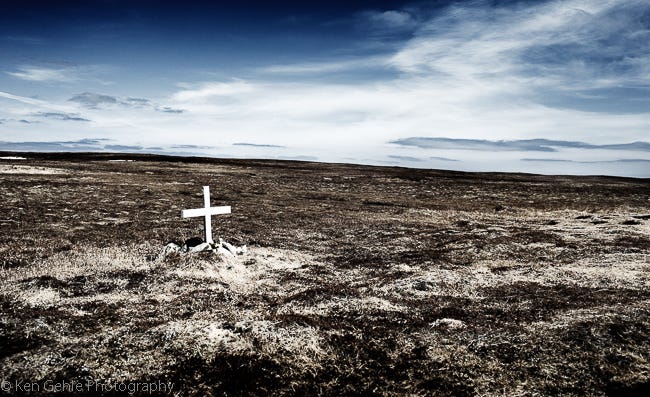
Collective grief is not theoretical. We experience it in our bodies, our relationships, our work, and our sense of safety in the world. It is grief for the people who have been killed. It is grief for those living under constant threat. It is grief for communities targeted by policies and practices designed to harm them. Black and brown people are not incidental casualties of this system. They are its primary targets.
It is also grief for what these events ask of us emotionally. To witness, sometimes against our will. To absorb. To continue functioning. To advocate harder. Some are carrying grief not only for what has happened, but for how familiar it feels.
There is grief over the sheer volume of it all. The sense that there is no time to metabolize one loss before the next arrives. For many, it is also a moral grief. The pain of witnessing harm that violates our deepest values, paired with the knowledge that we have limited power to stop it.
One of the most painful layers of this moment is relational. People are grieving not only what is happening, but how their loved ones are responding to it. Friends. Family members. Colleagues. People who explain away state violence. People who minimize deaths. People who ask us to be their version of ‘reasonable.’ People who regurgitate the propaganda of the state as gospel.
That creates a particular kind of grief. The grief of realizing that shared values may not be shared after all. The grief of feeling emotionally unsafe in relationships that once felt grounding. The grief of choosing silence or distance to protect oneself.
When This Shows Up in Grief Work
Clients may come to us saying, “I don’t recognize the people I love anymore.” That loss is real. It deserves to be named as grief, not dismissed as mere political disagreement. Or they may come to us without naming any of this explicitly. They may talk about trouble sleeping, difficulty concentrating, a sense of hopelessness, or a desire to withdraw. They may feel ashamed of their emotions or confused by their numbness.
As practitioners, we do not need to resolve this grief. We do not need to reframe it toward optimism. We do not need to make it productive.
What may be needed most is permission. Permission to name what is happening as harmful. Permission to grieve without being told to move on, or that you are too far away from the events to possibly care. Permission to feel the cold without being rushed toward warmth.
Exploring With Clients
We suggest that you explore with clients using invitational questions:
To explore the grief itself
What have you lost trust in during this time?
What feels frozen or stalled in you right now?
What moments or events have made this grief sharper or heavier?
To explore the impact of community
Where do you feel most alone in your response to what is happening?
Where do you feel most supported?
What boundaries feel newly necessary, even if they are painful?
What community can you gather to bear witness with you now?
To explore agency and care
What helps you stay grounded in the face of this?
Where do you feel even a small amount of steadiness or warmth?
What kind of witnessing do you need right now?
What actions have you taken or can you take to lessen feelings of powerlessness?
These are not questions to answer quickly. Sit with them and let the answers unfold. Return to them occasionally. These questions are for your clients, but maybe you need to sit with them too.
We are living in a moment that asks a great deal of our nervous systems and our hearts. Collective grief in times of state violence is a sane response to sustained harm.
Winter does not ask our permission, but it does remind us that survival is not about denial. It is about tending to what we know needs to be done, gathering resources, sharing with community even if we have to make a new one and, yet, still witnessing.
Even when the road ahead is icy.
Even when visibility is limited.

This is beautiful - all of it. I have written in the past about ambiguous grief, and we are many of us living it right now. My life is pretty damn excellent - but the chaos swirling around us all is terrifying and grief is a part of that along with the frustration and the anger. It's hard sometimes to know what to do with all these feelings. Thank you for giving us a structure to begin to process them.
Thank you for this deeply moving reflection on our collective and accumulative grief. Your words provide guidance and solace and the questions guide us toward deep reflection. Thank you.